
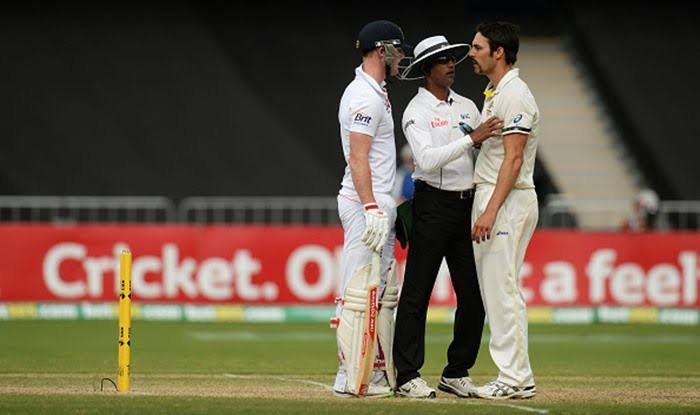

Cricket is known for its competitive spirit, intense rivalries and memorable on-field exchanges. Alongside batting, bowling and fielding, verbal battles have also become part of the sport. Players sometimes use comments, jokes and challenges to disturb an opponent’s concentration. This practice is known as sledging.
Sledging in cricket can range from harmless banter to personal insults. Some exchanges become famous because of a clever reply or an impressive response with the bat. Others create controversy and lead to disciplinary action.
But what exactly does sledging mean? Is it allowed under cricket rules? And which incidents are remembered by fans? Here is everything you need to know.
What Is Sledging in Cricket?
Sledging in cricket refers to the practice of using verbal comments, jokes, insults or psychological tactics to distract an opposing player. The main aim is to make the opponent lose concentration, become frustrated or make a mistake.
It usually happens when a batter is facing a bowler. Wicketkeepers and close fielders may make comments from behind the stumps or around the batter. Bowlers can also exchange words with batters after delivering a ball or during a tense moment.
Sledging is not limited to verbal abuse. It can include humorous remarks, repeated questions, sarcastic comments and attempts to create pressure.
For example, a wicketkeeper might remind a batter about a previous dismissal. A bowler may challenge a batter to play an attacking shot. These comments are intended to affect the opponent’s mindset.
However, there is an important difference between competitive banter and personal abuse. When comments become offensive, threatening or discriminatory, they can lead to disciplinary action.
Origin of Sledging in Cricket
The term sledging is generally associated with Australian cricket. Its exact origin is debated, but former Australian captain Ian Chappell linked it to an incident at Adelaide Oval during the 1963–64 or 1964–65 Sheffield Shield season.
According to this account, a player who used offensive language in front of a woman was said to have reacted like a sledgehammer. The term eventually became associated with verbal attacks directed at opponents.
Another explanation connects the word with Australian cricketer Grahame Corling and a song by Percy Sledge. These competing stories mean that the exact origin cannot be established with complete certainty.
Although the word became popular in Australia during the 1960s and 1970s, verbal exchanges between cricketers existed long before that period.
Why Do Cricketers Use Sledging?
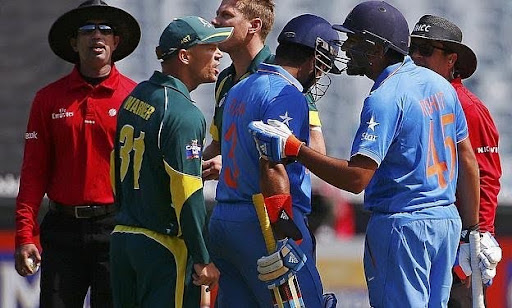
Source Image :Cricketworld
Players use sledging as a psychological tactic. Cricket requires concentration, patience and quick decision-making. Even a small distraction can affect a batter’s timing or a bowler’s control.
Here are some common reasons behind sledging.
1. To Break Concentration
A batter needs to focus on the bowler’s action, line, length and movement. Continuous comments from close fielders can make it harder to maintain that focus.
2. To Create Pressure
A bowler may use verbal challenges to encourage a batter to play an attacking shot. If the batter responds emotionally, they might take an unnecessary risk.
3. To Build Team Confidence
Sledging can also help fielding teams maintain energy and intensity. Wicketkeepers and close fielders often communicate throughout an innings to keep teammates involved.
4. To Gain a Psychological Advantage
A clever remark can sometimes put an opponent under pressure. However, it can also motivate the target to perform better. Not every player reacts to sledging in the same way.
Is Sledging Allowed in Cricket?
Sledging is not automatically an offence under cricket’s Laws. Normal conversation and competitive banter are part of the game. However, players cannot use verbal exchanges as an excuse for abusive, threatening or discriminatory behaviour.
The Marylebone Cricket Club (MCC) is responsible for writing and maintaining the Laws of Cricket. Its latest edition, the 2017 Code, Fourth Edition (2026), came into force on 1 October 2026. It retains Law 42, titled Players’ Conduct, which explains how umpires should deal with unacceptable behaviour.
International cricket also follows the ICC Code of Conduct for Players and Player Support Personnel. This is a separate disciplinary framework and should not be confused with the MCC Laws.
What Does MCC Law 42 Say?
Law 42 deals with unacceptable player conduct. It identifies four levels of offences, based on the nature and seriousness of the behaviour.
The umpires assess the incident and decide which level applies. The consequences differ depending on the offence and whether the team has already committed a Level 1 offence during the match.
| Level | Examples of conduct | Main action under Law 42 |
| Level 1 | Obscene, offensive or insulting language, obscene gestures, excessive appealing or dissent | The team’s first Level 1 offence leads to a first and final warning. Any further Level 1 offence results in five penalty runs. |
| Level 2 | Seriously insulting language or gestures, inappropriate physical contact, or throwing the ball at or near someone in a dangerous manner | Five penalty runs are awarded to the opposing team, followed by a report to the relevant authorities. |
| Level 3 | Intimidating an umpire through language or gestures, or threatening to assault a player or another person other than an umpire | Five penalty runs and suspension of the offending player for a prescribed period. |
| Level 4 | Threatening to assault an umpire, inappropriate deliberate physical contact with an umpire, physical assault or another act of violence | Five penalty runs and removal of the offending player from the match. |
These are summaries, not a complete list of offences or procedures. For example, a Level 3 suspension is generally 10 overs in a match without a fixed over limit, or one-fifth of the innings’ allocated overs in a limited-overs match. The precise procedure depends on the format and the circumstances.
The 2026 edition also makes clear that throwing the ball at or near a player, umpire or another person in an inappropriate and dangerous manner can constitute a Level 2 offence. It is not necessary for the ball to hit someone.
Therefore, not every sledge results in a penalty. Umpires consider the language, actions, context and seriousness of the incident before applying the relevant provisions.
ICC Playing Conditions Update: 1 October 2026
Alongside the new MCC Laws, the International Cricket Council introduced updated Playing Conditions for men’s and women’s international cricket from 1 October 2026. These changes apply to international series starting on or after that date, while ongoing series continue under their previous regulations.
The updated Playing Conditions incorporate changes to the MCC Laws of Cricket. The 2026 MCC edition contains 73 material changes, covering several aspects of the game.
Some important updates include:
- Revised measures to penalise batters who waste time before facing a delivery.
- Updated size and weight specifications for men’s, women’s and junior cricket balls.
- Clearer definitions of overthrows and misfields.
- Changes to how umpires determine whether a ball is finally settled.
- Clarification of the complete control required when a fielder holds the ball for a run-out or stumping.
These updates cover the wider playing framework rather than changing the basic distinction between acceptable banter and unacceptable player conduct.
What Does the ICC Code of Conduct Say?
International players are also subject to the ICC Code of Conduct for Players and Player Support Personnel. Some provisions are particularly relevant to sledging:
- Article 2.5: Covers language, actions or gestures that disparage a batter or could provoke an aggressive reaction following a dismissal.
- Article 2.13: Covers personal abuse directed at a player, player support personnel, umpire or match referee.
- Other provisions: The ICC Code of Conduct also includes provisions covering intimidation of match officials through language or conduct.
Depending on the offence and its classification, players can receive warnings, fines, demerit points or suspensions under the ICC disciplinary framework.
How Does the ICC Demerit Points System Work?
The ICC uses a demerit points system to monitor repeated breaches of its Code of Conduct. Points are added to a player’s disciplinary record when a sanction is imposed for an offence.
The system works as follows:
- Demerit points are awarded: Depending on the seriousness of the offence, a player can receive one or more demerit points.
- 24-month record: Demerit points remain on the player’s disciplinary record for 24 months from the date they are imposed. After this period, they are removed.
- Four-point threshold: When a player accumulates four or more demerit points within a 24-month period, they are converted into suspension points.
- Suspension: Four to seven demerit points convert into two suspension points. These result in a ban from one Test match or two ODIs or T20Is, whichever comes first for the player.
This system means repeated misconduct can have more serious consequences than an isolated offence.
Racial and religious abuse is dealt with separately under the ICC Anti-Racism Code. It should never be treated as ordinary sledging or acceptable banter.
The key point is simple: players can compete verbally, but they must respect the rules and their opponents.
Famous Sledging Incidents in Cricket
Cricket history includes several memorable verbal exchanges. Some are remembered for their humour, while others became controversial because they crossed the line.
1. Shane Warne and Daryll Cullinan
Australian spinner Shane Warne and South African batter Daryll Cullinan had a famous rivalry during the 1990s.
Warne often tried to put Cullinan under pressure whenever he came out to bat. During one encounter, Warne reportedly reminded him that he had waited several years for another opportunity to dismiss him.
Cullinan reportedly replied that Warne seemed to have spent the waiting period eating. The response became one of the best-known examples of a batter answering a sledge with humour.
2. Merv Hughes and Javed Miandad
Australian fast bowler Merv Hughes and Pakistan batter Javed Miandad were involved in a memorable exchange during the Adelaide Test in January 1990.
Miandad reportedly called Hughes a fat bus conductor after the bowler had been giving him trouble. Hughes eventually dismissed Miandad in the second innings, with Miandad scoring 21 runs before being caught by Taylor off Hughes’s bowling.
Hughes then reportedly ran past the departing batter with a famous ticket-related remark. The exchange remains a classic example of cricket humour.
3. Venkatesh Prasad and Aamer Sohail
The 1996 Cricket World Cup quarter-final between India and Pakistan produced one of the most remembered moments in Indian cricket.
Pakistan batter Aamer Sohail hit a boundary off Venkatesh Prasad and gestured towards the area where he wanted the next delivery to go.
Prasad responded by dismissing Sohail on the following ball. The Indian bowler celebrated passionately, and the moment became an iconic part of the rivalry.
Although the incident is often discussed alongside sledging, it is more accurately remembered as an on-field exchange involving a gesture and an immediate dismissal.
4. Yuvraj Singh and Andrew Flintoff
India and England faced each other in the 2007 ICC World Twenty20 in Durban. An exchange between Yuvraj Singh and Andrew Flintoff added tension to the contest.
Yuvraj responded in spectacular fashion during the following over, hitting Stuart Broad for six sixes in six consecutive deliveries.
The achievement made Yuvraj the first batter to hit six sixes in an over in T20 international cricket. The exchange is still remembered as one of the most dramatic responses to on-field provocation.
5. MS Dhoni and Andre Nel
During India’s tour of South Africa in 2006, wicketkeeper MS Dhoni exchanged words with fast bowler Andre Nel.
Dhoni reportedly made a humorous comment about bringing down the Eiffel Tower, referring to Nel’s height. The exchange became popular among Indian cricket fans because of Dhoni’s calm and witty response.
The exact wording is best treated as a reported remark rather than a confirmed transcript.
6. Rishabh Pant and Tim Paine
During the 2018 Boxing Day Test between India and Australia in Melbourne, Australian captain Tim Paine made comments to Rishabh Pant from behind the stumps.
Paine joked about Pant babysitting his children while he went out. Pant later responded when Paine came out to bat, calling him a temporary captain.
The exchange became even more popular when Pant was later photographed holding Paine’s baby. What began as a competitive exchange ended on a friendly note.
Sledging vs Banter: What Is the Difference?
People often use the terms sledging and banter interchangeably. However, there is a difference in how they are used.
| Sledging | Banter |
| Usually intended to distract an opponent | Usually intended as light humour |
| Can involve psychological pressure | Focuses on friendly exchanges |
| May include personal comments | Should avoid personal attacks |
| Can cross into abusive behaviour | Remains respectful |
| May lead to disciplinary action | Usually does not require official intervention |
The difference often depends on the words used, the intention behind them and the reaction of the person involved. A comment that one player considers harmless may be offensive to another.
Which Cricket Teams Are Known for Sledging?
Australian teams have traditionally been associated with sledging, particularly during the 1970s, 1990s and early 2000s.
Players such as Shane Warne, Merv Hughes, Glenn McGrath and Ricky Ponting were known for their competitive approach and involvement in memorable on-field exchanges.
However, sledging is not limited to Australia. India, England, Pakistan, South Africa, New Zealand and the West Indies have all had players involved in verbal exchanges.
The intensity often increases during major rivalries such as the Ashes and India versus Australia matches. These contests carry strong emotions, making every exchange more noticeable. This is a historical association rather than an objective ranking of teams.
Does Sledging Actually Work?
Sledging can sometimes affect a player’s concentration, but its success depends on the individual.
Some batters become frustrated and take unnecessary risks. Others use the comments as motivation and respond with better performances.
For example, Yuvraj Singh’s six sixes against England in 2007 showed how a player can turn an intense exchange into a memorable performance.
Experienced players often try to ignore verbal distractions and concentrate on the next delivery. Good decision-making remains more important than winning a verbal battle.
Conclusion
Sledging has been part of cricket culture for decades. It adds tension to rivalries and has produced several memorable moments involving players from different countries.
However, there is a clear difference between harmless banter and unacceptable conduct. Under the MCC Laws effective from 1 October 2026, Law 42 sets out four levels of unacceptable player conduct and the actions umpires can take. The updated ICC Playing Conditions also incorporate changes to the Laws across international cricket.
International cricket follows the separate ICC Code of Conduct, which includes provisions against personal abuse, intimidation and other forms of misconduct. Its demerit points system also ensures that repeated offences can lead to suspension.
Players can challenge each other verbally, but personal abuse, threats and discriminatory comments can lead to disciplinary action.
The best sledging moments are often remembered for the humour, confidence and cricketing response they create. Ultimately, performance with the bat and ball matters more than winning an argument.
Frequently Asked Questions
Sledging in cricket is the practice of using verbal comments, jokes or insults to distract an opponent and affect their concentration during a match.
Sledging is not automatically an offence. However, offensive language, personal abuse, threats and discriminatory behaviour can breach the Laws of Cricket or the ICC Code of Conduct and lead to disciplinary action.
Australia is traditionally associated with sledging. The term became popular in Australian cricket during the 1960s and 1970s, although the exact origin remains debated.
Shane Warne, Merv Hughes, Glenn McGrath, Ricky Ponting and Virat Kohli are among the players associated with memorable verbal exchanges on the field.
Sledging is a cricket-specific form of verbal pressure aimed at distracting an opponent. Trash talk is a broader term used across sports for competitive verbal exchanges.